
Biodegradable Bags Manufacturer in India: The Complete Guide for Local Businesses
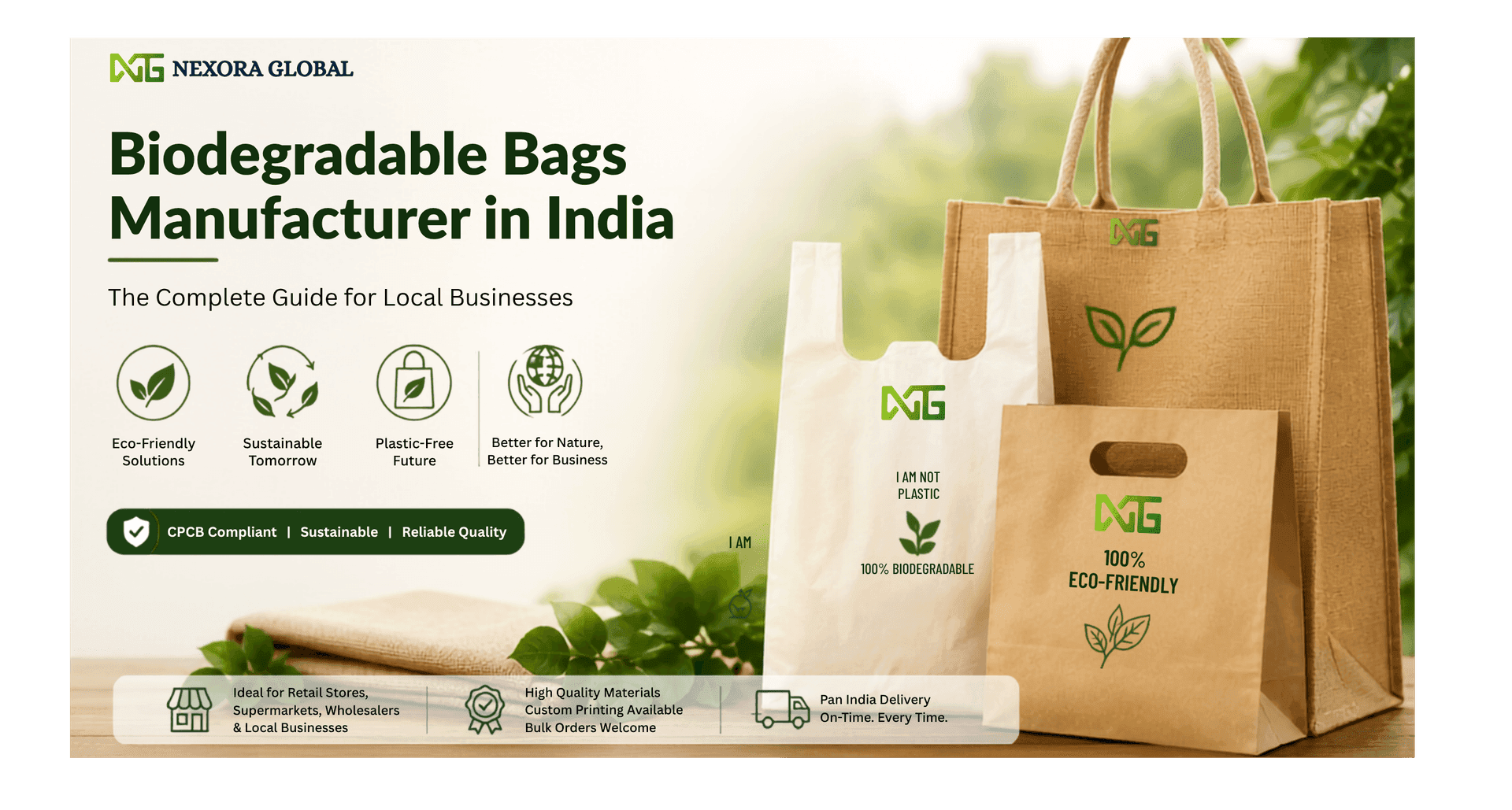
If you own a shop, boutique, grocery store, or a growing D2C brand in India, the transition toward sustainable packaging is no longer something happening in the background it's happening around you. Municipal regulations are tightening, customers are increasingly asking for eco-friendly alternatives, and more businesses are replacing conventional plastic with sustainable packaging. What was once a discussion limited to large exporters has become a practical business decision for lakhs of Indian SMEs: what is the right packaging solution for your products today??
This guide is designed for the people navigating these changes every day not large-scale exporters, but retailers, shopkeepers, wholesalers, event planners, and local brands across India. It provides practical, India-specific insights into biodegradable bags, including the latest regulatory requirements, pricing considerations, sourcing from trusted suppliers, and strategies to avoid being stuck with non-compliant plastic stock as enforcement continues to tighten.
Why Every Local Business Should Switch to Biodegradable Bags
India's Plastic Waste Management Rules, first notified in 2016 and amended several times since, ban single-use plastic carry bags below a prescribed thickness and restrict a wider list of single-use plastic items altogether. On top of the national framework, individual states and municipal corporations have layered their own, often stricter, enforcement drives with fines, seizure of stock, and even sealing of shops for repeat offenders in several cities.
For a large exporter, a compliance failure might mean a delayed shipment. For a local shop, it can mean a fine on the spot, confiscated inventory in front of customers, and reputational damage in a neighbourhood where word travels fast. This is precisely why local businesses can't treat "going biodegradable" as a marketing choice anymore it's closer to a basic operating requirement, similar to having a trade license or GST registration.
Understanding Biodegradable Bags: What Every Business Should Know
There's a lot of confusion at the local retail level between "biodegradable," "compostable," and simply "cloth" or "paper" and unfortunately, quite a few suppliers use these words loosely to sell bags that don't hold up to scrutiny if an inspector actually asks for documentation.
For an Indian business, the two things worth actually verifying from any supplier are:
- CPCB Registration - manufacturers of compostable/biodegradable plastic products are expected to register with the Central Pollution Control Board or the relevant State Pollution Control Board. A supplier who can share a valid registration number is operating within the compliance framework your business will ultimately be judged against.
- IS/ISO 17088 certification- the Indian standard for compostable plastics, used to confirm that a "biodegradable" bag will actually break down as claimed, rather than simply fragmenting into smaller plastic pieces (a common issue with cheaper "oxo-degradable" bags sold informally in local markets).
If a local supplier can't produce either of these when asked, it's worth treating their "biodegradable" claim with real caution because if your municipal corporation runs an inspection, an uncertified bag offers you no protection even if you genuinely believed it was compliant.
A simple question to ask any local supplier
"Can you share your CPCB registration number and any compostability certificate for this specific bag?" A real manufacturer will answer this without hesitation. A reseller of unverified stock usually can't.
Which Type of Biodegradable Bag Suits Your Business?
Not every local business needs the same bag. A grocery store, a clothing boutique, and a corporate gifting company all have very different requirements around cost, strength, and presentation. Here's a practical breakdown for the Indian retail context:
| Bag Type | Best Suited For | Approx. Cost Range* | Notes |
|---|---|---|---|
| Biodegradable Bags | Grocery stores, kirana shops, vegetable vendors | Low Moderate | Closest substitute to conventional plastic in feel and strength |
| Paper bags | Bakeries, food takeaway, small retail | Low | Widely accepted, easy to print, not ideal for wet/heavy items |
| Jute bags | Boutiques, gifting, wedding favours, D2C brands | Moderate High | Reusable, premium look, strong brand recall value |
*Actual pricing depends on size, print complexity, and order quantity ask your supplier for a quote based on your specific requirement.
For many local businesses, the right answer isn't a single bag type it's a mix. A supermarket, for instance, might use cornstarch blend bags for everyday grocery packing while stocking jute bags near the billing counter as a paid, reusable, premium option for customers who want it.
What Local Businesses Typically Ask Before Ordering
1. "What's the minimum quantity I need to order?"
This is usually the first concern for a shop owner or small brand, and it's a fair one nobody wants to be sitting on ten thousand printed bags they can't use. Reasonable local manufacturers structure their MOQs specifically for this audience, offering smaller batches for plain or lightly customized bags, with pricing that improves as order size grows.
2. "Can I get my shop's name or logo printed on these?"
Branded biodegradable bags bags are one of the most cost-effective, always-on advertising tools a local business has every customer carrying your bag home is a small walking advertisement in their neighbourhood. Most biodegradable bag manufacturers can print your business name, logo, or a simple tagline, though it's worth checking that the ink used doesn't compromise the bag's compostability.
3. "Will these hold up as well as plastic did?"
This depends entirely on matching the right material to your actual use case. A cornstarch blend bag rated for grocery weight will perform differently from a thin paper bag which is why it's worth being specific with your supplier about what you're packing (wet vegetables, dry goods, clothing, gifts) rather than just asking for "biodegradable bags" generically.
4. "How quickly can I get a fresh batch once I place a repeat order?"
For local businesses, consistent supply matters more than a one-time bulk deal running out of compliant bags mid-week and reverting to plastic, even temporarily, defeats the purpose and creates compliance risk. A manufacturer based within India, ideally one you can reach on short notice, is generally a safer long-term partner than sourcing through multiple middlemen.
A Quick Checklist Before You Order
- Ask for the supplier's CPCB registration number and any relevant compostability certificate.
- Match the bag material to your actual product don't default to whatever is cheapest without checking it can handle your typical load.
- Clarify the minimum order quantity and whether smaller trial batches are available before committing to a large order.
- Ask whether printing or branding is available, and confirm it won't affect the bag's compostability.
- Confirm turnaround time for repeat orders so you're never caught without compliant stock.
Where This Is Headed for Local Businesses
Enforcement of plastic bag restrictions across Indian cities and towns has generally moved in one direction tighter, not looser as municipal bodies come under pressure to show results on waste management. For local businesses, the practical takeaway is simple: the sooner the switch happens on your own terms, with a reliable supplier and predictable costs, the less likely you are to face a rushed, expensive scramble later when an inspection drive lands unannounced.
Customers are also increasingly forming opinions based on this a shop that's visibly ahead of the compliance curve, using proper biodegradable or reusable bags, tends to read as more trustworthy and modern to the average Indian consumer today, even in smaller towns.
Frequently Asked Questions
Is it mandatory for Indian shops and businesses to use biodegradable bags?
Under the Plastic Waste Management Rules, single-use plastic carry bags below prescribed thickness are banned nationally, and several states have gone further with stricter local bans. Most retailers and local businesses are required to switch to compliant alternatives such as cloth, jute, paper, or certified compostable bags.
How much more do biodegradable bags cost compared to plastic bags in India?
Typically 20 to 70 percent more per piece than banned plastic bags, depending on material and order size. Paper and basic cornstarch-blend bags are more affordable, while jute and printed premium bags cost more. Bulk ordering brings the per-piece cost down.
What is the minimum order quantity for local businesses ordering biodegradable bags?
Many Indian manufacturers offer smaller MOQs suited to local shops and small retailers sometimes starting from a few hundred to a couple of thousand pieces per design, especially for plain or lightly branded bags.
How can a local business verify that a supplier's biodegradable bags are genuinely compliant?
Ask for the supplier's CPCB registration number and any IS/ISO 17088 compostability certification for the specific product. A genuine manufacturer will share this directly rather than relying on general "eco-friendly" claims.
Ready to Make the Switch to Biodegradable Bags?
Whether you're a retail store, supermarket, pharmacy, restaurant, wholesaler, or growing D2C brand, choosing the right packaging partner is just as important as choosing the right product.
At Nexora Global, we supply premium biodegradable carry bags designed to meet the needs of businesses across India. From custom printing and multiple size options to reliable bulk supply, we're committed to helping businesses transition to sustainable packaging with confidence.
Explore Our Biodegradable Bags | Request a Free Quote
Have questions about product specifications, customization, or bulk orders? Get in touch with our team we're here to help you find the right packaging solution for your business.
Explore Related Products
Discuss Packaging Solutions
Connect directly with our international sales and export division to request volume pricing and customization specifications.